

Radial vs. Focused Shockwave Therapy for Tendon Pain: What the Latest Research Shows
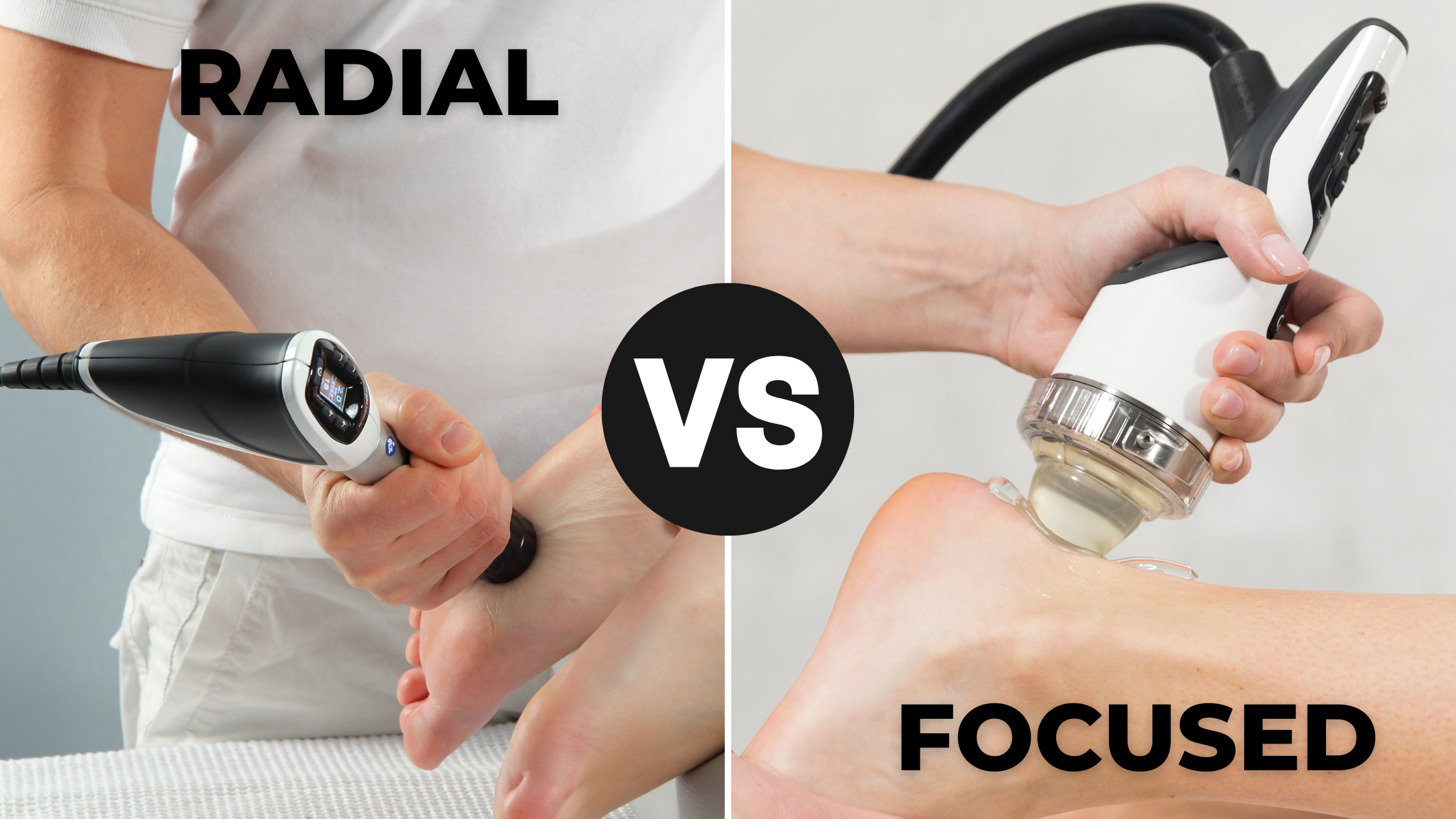
If you've been evaluated for tendon pain and shockwave therapy has come up as a potential treatment option, you may have heard that there are actually two different types: radial and focused. A reasonable follow-up question is: does it matter which one you get?
A 2026 systematic review and meta-analysis published in Scientific Reports set out to answer exactly that. Researchers analyzed nine randomized controlled trials involving 530 patients with upper and lower limb tendinopathies, directly comparing radial shockwave therapy (RSWT) and focused shockwave therapy (FSWT). It's one of the most thorough head-to-head comparisons of these two approaches to date, and the findings are worth understanding if you're navigating treatment decisions for a stubborn tendon injury.
The Two Types of Shockwave Therapy
Before getting into what the study found, a quick refresher on how these two approaches differ:
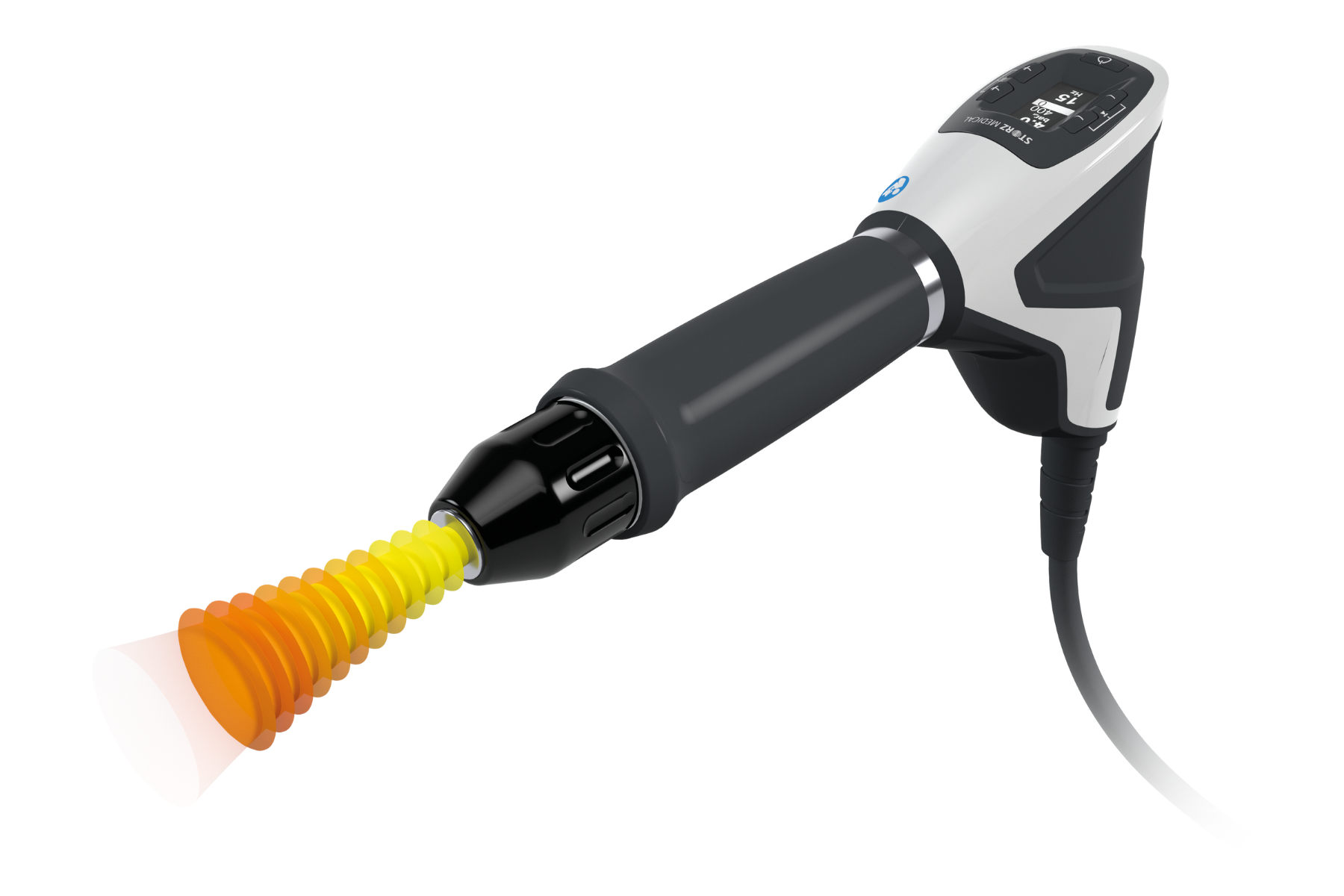
Radial Shockwave Therapy Device
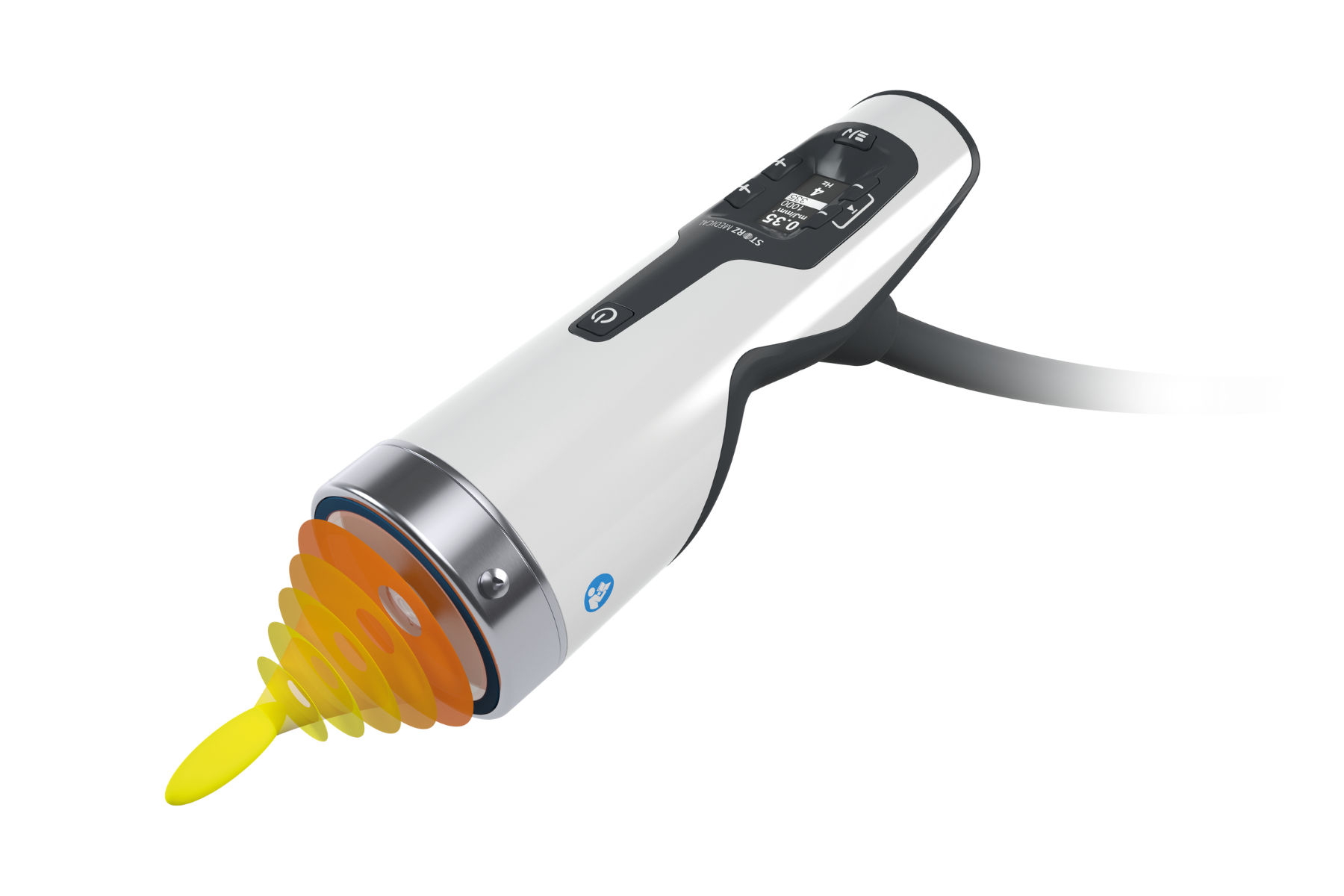
Focused Shockwave Therapy Device
Radial shockwave therapy
Radial shockwave therapy disperses energy over a broader, more cone-shaped area. The peak energy occurs closer to the surface rather than at a specific depth, which means it covers more ground but with less pinpoint precision.
Focused shockwave therapy
Focused shockwave therapy concentrates all of its energy at a precise focal point deep within the tissue. It's highly targeted and is often guided by ultrasound imaging to ensure the energy reaches the exact site of pathology.
Both types are widely used to treat conditions like tennis elbow, patellar tendinopathy, Achilles tendinopathy, and rotator cuff tendinopathy, and both are considered safe, non-invasive options that work by stimulating the body's natural tissue repair processes.
What the Study Found
The researchers pooled data across nine randomized controlled trials and looked at several key outcomes: pain intensity, physical function, muscle strength, and adverse effects. Here's a breakdown of the major findings.
Pain Reduction
When used as a standalone treatment (monotherapy), focused shockwave therapy showed a statistically significant advantage in pain reduction compared to radial shockwave therapy. However, this finding was supported only by low-certainty evidence, meaning it should be interpreted cautiously rather than as a definitive conclusion.
When both types were combined with other conservative treatments like exercise programs or conventional physical therapy, no significant difference in resting pain was found between the two approaches.
Functional Outcomes
For patients with patellar tendinopathy, FSWT combined with other treatment showed a statistically significant improvement in VISA-P scores (a validated functional outcome measure for patellar tendon problems) compared to RSWT combined with other treatment. Again, this finding was rated as low-certainty evidence, so it points in an interesting direction without being definitive.
Muscle Strength
This is where things get more interesting, and where the evidence quality improves slightly. In patients with tennis elbow, radial shockwave therapy produced significantly greater improvements in wrist extensor strength compared to focused shockwave therapy when used as a standalone treatment. This finding was supported by moderate-certainty evidence, making it one of the more reliable takeaways from the study.
The researchers suggested that this advantage may be related to radial shockwave's ability to stimulate a broader area, covering not only the lateral epicondyle but also the surrounding forearm extensor muscles, which is relevant given that tennis elbow involves both the tendon attachment and the muscles that feed into it.
Grip strength, on the other hand, showed no significant difference between the two approaches, also supported by moderate-certainty evidence.
Safety
Both radial and focused shockwave therapy came out looking equally safe. The proportion of patients who reported pain during treatment was similar between the two groups, and there were no significant differences in adverse effects. The side effects that did occur were generally minor and temporary: things like brief skin redness, mild bruising, or post-treatment soreness. None of the patients in the included studies required anesthesia, which speaks to the tolerability of both approaches.
How to Interpret These Findings
The honest takeaway from this study is that neither approach is clearly superior across the board. Both radial and focused shockwave therapy appear to be effective and safe options for tendinopathy, and for most pain and functional outcomes, the differences between them are modest and supported by low-quality evidence.
The researchers were appropriately careful in how they framed these conclusions. A significant source of variability across the included studies was the wide range of treatment protocols used. Differences in the number of shocks delivered, energy levels, session frequency, and the specific tendons being treated all make it challenging to draw sweeping conclusions. Future research with more standardized protocols will help clarify things further.
That said, a few clinically useful patterns did emerge. The moderate-quality evidence favoring radial shockwave for wrist extensor strength in tennis elbow is meaningful. And the broader finding that shockwave therapy tends to perform well when combined with exercise and rehabilitation, rather than used in isolation, is consistent with what the clinical literature has been pointing toward for some time.
What This Means Practically
For patients, the most important takeaway is probably this: if shockwave therapy is appropriate for your condition, both types have a reasonable evidence base behind them. The choice between radial and focused shockwave is something your clinician should be making based on a number of factors, including the specific tendon involved, the location and depth of the pathology, the chronicity of your symptoms, and how the treatment fits within your overall care plan.
What matters more than which type of shockwave is used is whether it's being applied at the right time, to the right tissue, in the right combination with other treatments. A thorough evaluation is the necessary starting point.
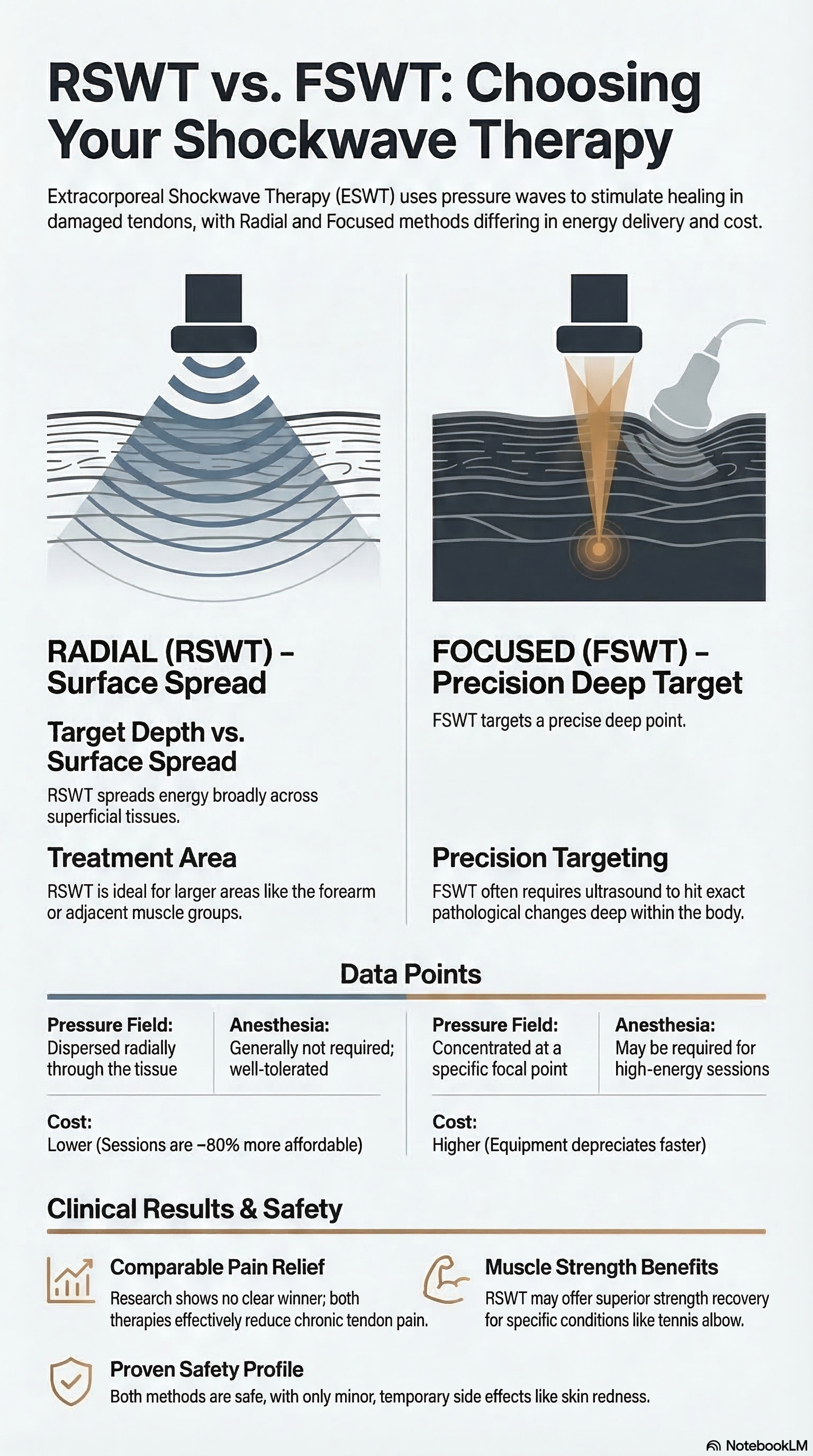
Findings from the study published in Scientific Reports (2026)
The Bottom Line
This 2026 systematic review offers some of the best direct comparison data we have on radial vs. focused shockwave therapy. The overall conclusion, that neither approach has a clear and consistent edge for pain and function, is actually reassuring in a sense. It means both are viable tools, and clinical decision-making can be guided by the specifics of each patient's presentation rather than a blanket rule.
If you've been dealing with persistent tendon pain and want to understand whether shockwave therapy makes sense for you, we'd be happy to walk through it together.
Schedule an evaluation at Resolve Chiropractic at resolvechiro.com and let's figure out the best path forward for your specific situation.
Study: Stania, M., Pawłowski, M., Benduch, M. et al. Efficacy of radial and focused shockwave therapy for tendinopathy: a systematic review and meta-analysis. Sci Rep 16, 7632 (2026). https://doi.org/10.1038/s41598-026-37160-3
Disclaimer: This post is for educational and informational purposes only. It is neither intended to diagnose nor to serve as the basis of treatment for any condition. If you are experiencing tendon pain, it is best to consult with a licensed healthcare provider so that an accurate diagnosis and treatment plan can be provided.