

Myofascial Release in San Juan Capistrano for Active Adults
Targeted soft tissue treatment designed to help you move better, not just feel looser for a day.
Myofascial release is one of the hands-on soft tissue treatments we use at Resolve Chiropractic to help reduce muscle tension, improve mobility, and address areas of restriction that may be contributing to pain or limiting movement.
But at Resolve, myofascial release is not treated like a standalone service, a general massage, or a temporary “feel-good” treatment.
It is used as part of a larger plan.
We look at how your body moves, where you are restricted, what tissues may be contributing to the problem, and how those restrictions are affecting your ability to train, sit, lift, rotate, run, golf, or move comfortably.
What Myofascial Release Actually Is - And What It Is Not
Fascia is connective tissue that surrounds and supports your muscles, joints, nerves, and other structures throughout the body. When an area becomes irritated, overworked, injured, or exposed to repetitive stress, the surrounding soft tissue can become sensitive, guarded, restricted, or less tolerant to movement.
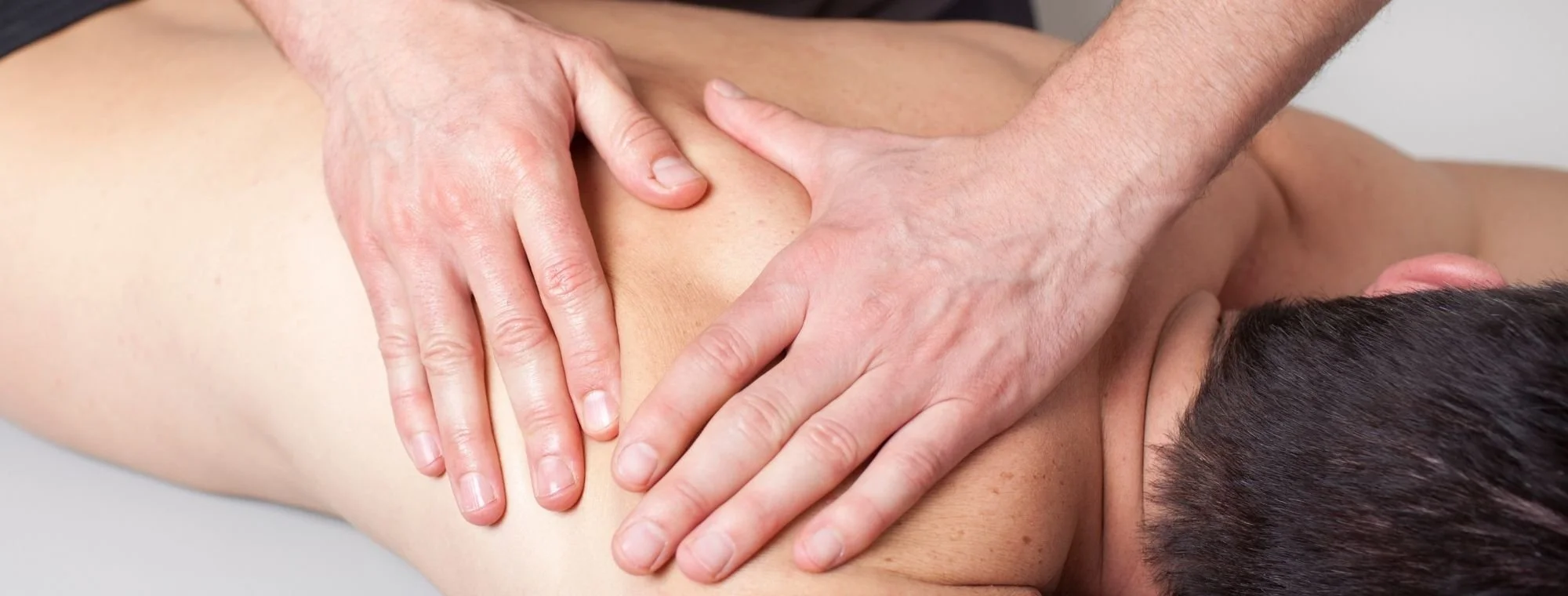
Myofascial release uses targeted pressure and hands-on soft tissue techniques to address these areas of restriction.
This may help improve tissue mobility, reduce muscle guarding, improve range of motion, and make it easier to move into positions that previously felt tight, stiff, or uncomfortable.
But here is what it is not:
It is not a relaxation massage.
It is not randomly digging into the most painful spot.
It is not a cure-all for every ache and pain.
And it is rarely the entire solution by itself.
Effective soft tissue work requires understanding why an area is tight or restricted in the first place. That is why we pair hands-on treatment with assessment, movement testing, chiropractic care when appropriate, and active rehab.
This fits Resolve’s broader educational approach: helping our patients understand how anatomy, movement, strength, and tissue function contribute to pain and performance, rather than treating symptoms in isolation.
How We Use Myofascial Release at Resolve Chiropractic
We do not use the same soft tissue approach for every patient.
Your treatment depends on your symptoms, your exam findings, your comfort level, your activity demands, and your goals.
Assessment-Driven Treatment
Before we treat, we want to understand what is actually contributing to the problem.
That may include looking at joint motion, muscle tension, movement patterns, strength, stability, posture, training demands, and how your symptoms behave during specific activities.
For example, low back tightness may be related to the hips. Neck tension may be connected to shoulder or upper back mobility. Hamstring tightness may not actually be a hamstring problem at all.
We do not just chase the sore spot.
We look for the reason the sore spot is overloaded.
Integrated With Chiropractic Care and Rehab
Myofascial release often works best when it is combined with other forms of care.
For some patients, that may include chiropractic adjustments to improve joint motion. For others, it may include mobility drills, strengthening exercises, core stabilization, or progressive rehab.
The sequence matters.
If we improve soft tissue mobility but never teach your body how to control or strengthen that range of motion, the tightness often returns.
That is why our goal is not just temporary relief. It is helping you build better movement capacity over time.
Applied With Your Goals in Mind
The way we treat a runner with hip tightness may look different than how we treat a golfer with low back stiffness, a desk worker with neck tension, or a lifter with shoulder restriction.
Your treatment should connect directly to what you want to get back to.
That might be training without flare-ups, rotating better during your golf swing, sitting through a workday without neck tension, or getting back to exercise after an injury.
Common Issues Myofascial Release May Help Address
Myofascial release can be useful when soft tissue restriction, muscle guarding, or tissue sensitivity is contributing to pain or limited movement.
At Resolve Chiropractic, we commonly use it as part of a treatment plan for:
Chronic Muscle Tightness That Keeps Coming Back
If you are constantly stretching, foam rolling, or using a massage gun on the same area, but the tightness keeps returning, the issue may not be simple muscle length.
The area may be guarding because of weakness, joint restriction, poor movement control, repetitive stress, or a lack of strength in a specific range of motion.
Myofascial release can help address the soft tissue component while your rehab plan addresses why the tightness keeps returning.
Low Back and Hip Tightness
For active adults, the low back and hips often take on a lot of stress from sitting, lifting, running, cycling, golf, tennis, and training.
Soft tissue restrictions around the hips, glutes, hip flexors, or low back can contribute to stiffness, limited rotation, and discomfort during movement.
Myofascial release may be used to improve mobility in these areas so your body can move more efficiently.
Neck, Shoulder, and Upper Back Tension
Long hours at a desk, training stress, poor recovery, and repetitive upper-body movement can all contribute to tightness through the neck, traps, shoulders, and upper back.
When appropriate, myofascial release can help reduce guarding and improve mobility so that other parts of your treatment — like adjustments, posture work, shoulder rehab, or strengthening — are more effective.
Restricted Range of Motion
Sometimes people feel stuck.
They have stretched. They have warmed up. They have tried mobility drills. But a certain movement still feels blocked, tight, or uncomfortable.
When soft tissue restriction is part of the reason, targeted myofascial release can help improve access to that range of motion.
Then we reinforce that change with movement and strengthening.
Sports and Training-Related Overuse
Active people often develop areas of repeated stress from the activities they love.
Golf. Tennis. Running. Lifting. Cycling. Pilates. Pickleball. Surfing. Gym training.
Over time, repetitive movement and compensation can create areas of increased tone, sensitivity, or restriction.
Myofascial release may help calm down irritated tissue, improve movement quality, and support recovery as part of a complete plan.
Why Soft Tissue Work Alone Usually Is Not Enough
A lot of people feel better after soft tissue work.
The problem is that feeling better for a few days is not the same as solving the reason the pain keeps coming back.
If your hip keeps tightening because your glutes are not tolerating load well, releasing the hip may help temporarily — but it will not fully solve the problem.
If your neck keeps tightening because your upper back is stiff and your shoulders lack control, soft tissue work may reduce symptoms — but it needs to be paired with better movement and strength.
If your low back keeps flaring up after golf, we need to know whether the issue is coming from the spine, hips, core, rotation mechanics, or workload.
That is why myofascial release at Resolve is used as part of a larger strategy.
Release what is restricted.
Restore motion where it is limited.
Build strength and control so your body can keep the change.
What You Will Not Experience at Resolve
No Generic Soft Tissue Work
We do not take the same approach with every patient or every body region. The treatment should match the problem.
No Randomly Chasing Pain
Where it hurts is not always where the problem started. We assess before we treat so we can understand what is actually contributing to your symptoms.
No “More Pressure Means Better Treatment” Mentality
Myofascial release can be uncomfortable at times, but it should not feel careless or excessive. The goal is therapeutic change, not seeing how much discomfort you can tolerate.
No Passive Care Without a Plan
Hands-on treatment can be valuable, but lasting progress usually requires active participation. We want you to leave with a better understanding of your body and a clear path forward.
No Endless Treatment With No Direction
If soft tissue work is helping, we use it. If your body no longer needs as much hands-on treatment, we shift the focus toward strengthening, mobility, and long-term independence.
Who Benefits Most From This Approach?
Myofascial release may be a good fit if you are an active adult dealing with stiffness, recurring tightness, or pain that has not fully improved with stretching, massage, or generic care.
You may benefit from this approach if:
You feel tight no matter how much you stretch
You rely on foam rolling or massage guns just to get through workouts
You have low back, hip, neck, shoulder, or upper back stiffness
Pain is limiting your ability to train, golf, run, lift, play tennis, cycle, or do Pilates
You have tried massage, PT, or traditional chiropractic care without lasting results
You want a plan that addresses the cause, not just the symptoms
You value efficient, one-on-one care that respects your time
This approach is especially well-suited for active, high-performing adults who want to keep moving well and refuse to let pain slow them down.