
Shockwave Therapy vs. Laser Therapy: What a New 2025 Study Tells Us About Treating Musculoskeletal Pain
When you are dealing with a stubborn injury, it is easy to feel like you have tried everything. Rest, stretching, massage, physical therapy exercises, anti-inflammatories, braces, and maybe even injections.
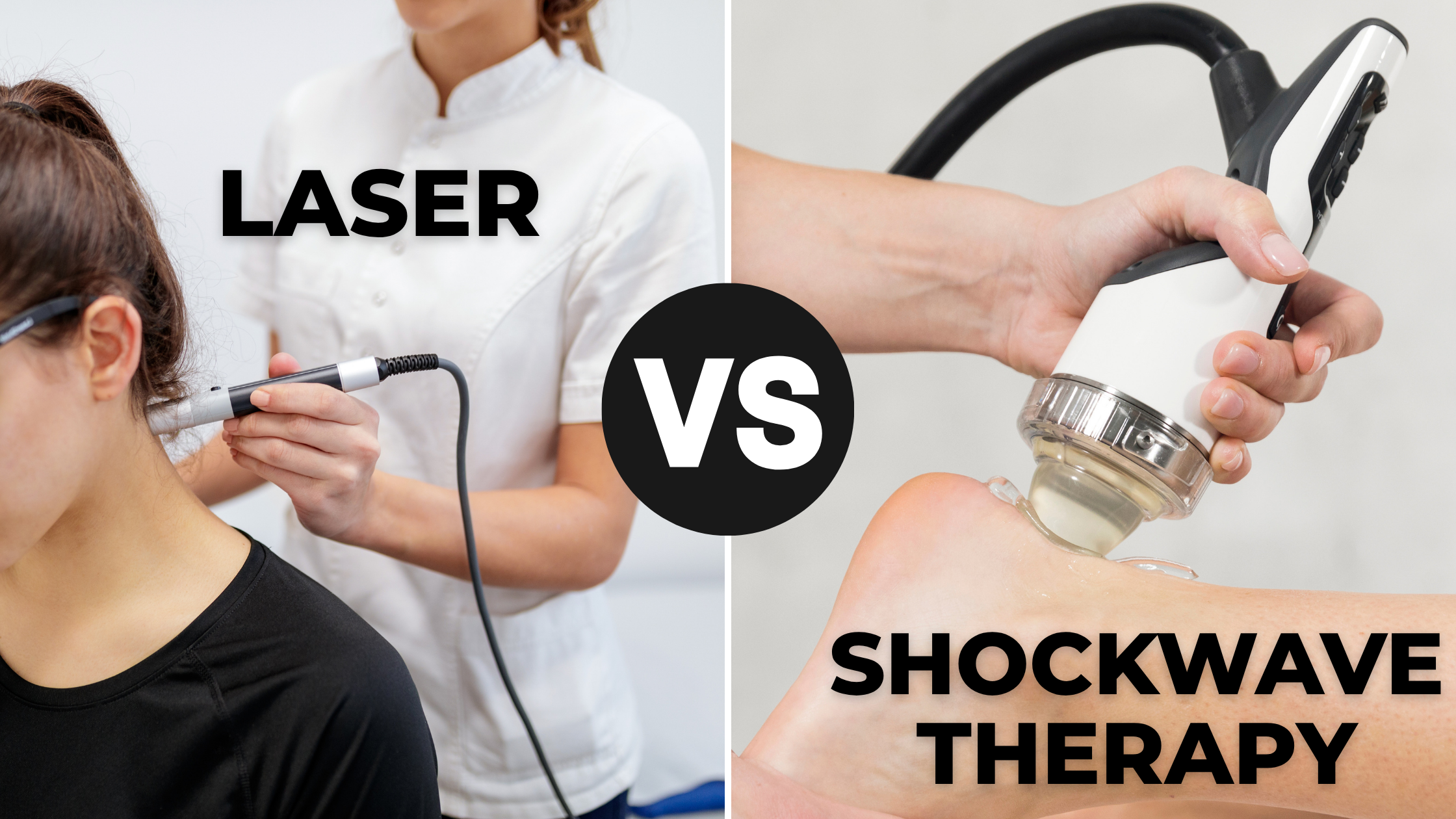
For patients with lingering tendon, joint, muscle, or soft tissue pain, two treatment options often come up: shockwave therapy and laser therapy.
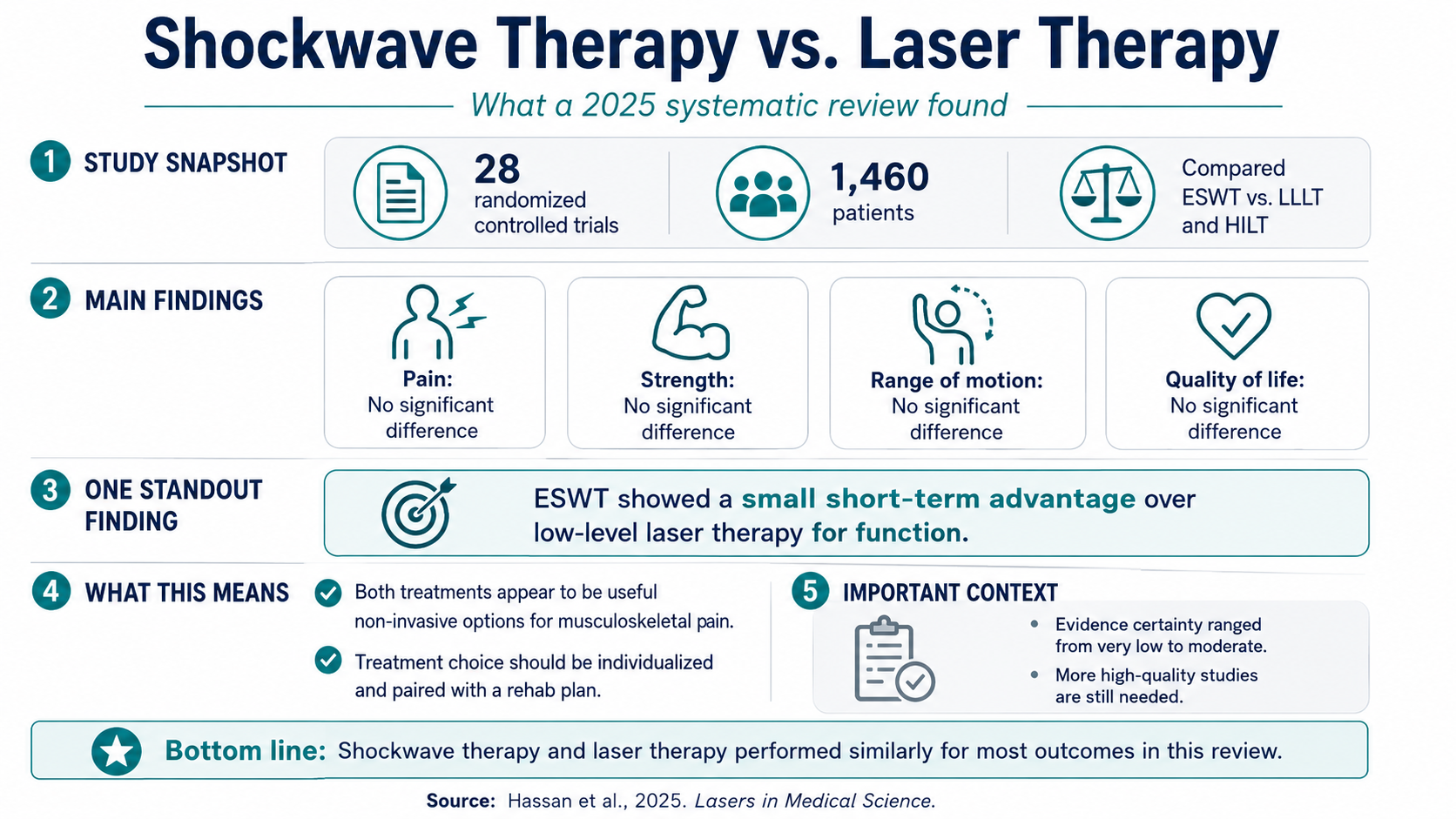
A recent 2025 systematic review and meta-analysis published in Lasers in Medical Science compared extracorporeal shockwave therapy (ESWT) with two types of laser therapy, low-level laser therapy (LLLT) and high-intensity laser therapy (HILT), for treating musculoskeletal disorders. The review included 28 randomized controlled trials and 1,460 patients, making it a helpful study for understanding how these treatments compare.
So what did the study find?
In short: shockwave therapy and laser therapy both appear to be useful treatment options for musculoskeletal pain, with no major difference between them for pain, strength, range of motion, or quality of life. However, shockwave therapy showed a small short-term advantage over low-level laser therapy for improving function.
What Was This Study Looking At?
The researchers wanted to compare shockwave therapy with laser therapy for people dealing with musculoskeletal conditions. These are conditions that affect muscles, tendons, joints, ligaments, bones, and related soft tissues.
The review included studies that measured outcomes such as:
Pain
Function
Strength
Range of motion
Quality of life
The researchers searched six databases for randomized controlled trials through February 2025, assessed risk of bias using the Cochrane RoB 2.0 tool, and evaluated the certainty of the evidence using the GRADE approach.
What Did the Study Find?
The biggest takeaway is that shockwave therapy performed similarly to both low-level laser therapy and high-intensity laser therapy for most major outcomes.
The researchers found no statistically significant difference between shockwave therapy and laser therapy for:
Pain reduction
Strength improvement
Range of motion
Quality of life
That means patients receiving shockwave therapy and patients receiving laser therapy generally experienced similar improvements in these categories.
One area where shockwave therapy stood out was short-term functional improvement. The study found that ESWT had a marginal statistically significant advantage over low-level laser therapy for improving function, but not over high-intensity laser therapy.
Why This Matters for Patients
This study supports what we often see clinically: passive modalities can be helpful, but they work best when they are part of a bigger plan.
Shockwave therapy is not just about “turning off pain.” It is often used to help stimulate a healing response in irritated or chronically overloaded tissues. For many patients, that can create a window where movement becomes more comfortable, strength work becomes more tolerable, and the rehab plan can progress.
That is important because most musculoskeletal conditions do not improve from passive care alone. Tendons, muscles, joints, and connective tissue usually need the right combination of:
Accurate diagnosis
Load management
Strengthening
Mobility work
Gradual return to activity
Treatment that supports tissue healing and pain reduction
This is why we use shockwave therapy as part of a broader rehab-based approach, rather than as a standalone solution.
Shockwave Therapy vs. Laser Therapy: Is One Better?
Based on this review, the most honest answer is: not clearly.
The study suggests that shockwave therapy and laser therapy can both help improve symptoms in musculoskeletal conditions. Shockwave therapy may have a slight advantage over low-level laser therapy for short-term function, but the overall evidence did not show a major difference between these treatments for pain, strength, range of motion, or quality of life.
It is also important to note that the certainty of evidence ranged from very low to moderate, which means we should avoid overstating the results. The authors concluded that larger, higher-quality randomized controlled trials are still needed before making stronger claims.
What Conditions Were Included?
The studies in this review included a variety of musculoskeletal conditions, including issues such as plantar fasciitis, lateral epicondylitis, myofascial pain, carpal tunnel syndrome, shoulder impingement, knee osteoarthritis, and other soft tissue or joint-related complaints.
That does not mean shockwave therapy is the right fit for every patient or every diagnosis. It does mean there is growing research interest in how these non-invasive treatment options may help people with persistent musculoskeletal pain.
Our Takeaway at Resolve Chiropractic
For patients in San Juan Capistrano, San Clemente, Dana Point, Laguna Niguel, Mission Viejo, and the surrounding South Orange County area, this study adds to the growing conversation around non-invasive options for stubborn musculoskeletal pain.
At Resolve Chiropractic, we use shockwave therapy most often when a patient has a condition that is not responding as quickly as expected to traditional rehab alone, or when we want to support the healing process while continuing to build strength and tolerance.
Common examples may include:
Plantar fasciitis
Achilles or patellar tendon irritation
Tennis elbow or golfer’s elbow
Rotator cuff or shoulder-related pain
Hip or gluteal tendinopathy
Chronic muscle or tendon pain
The key is matching the treatment to the person, not just the diagnosis.
The Bottom Line
This 2025 systematic review found that shockwave therapy and laser therapy produced similar improvements for pain, strength, range of motion, and quality of life in patients with musculoskeletal conditions. Shockwave therapy showed a small short-term functional advantage over low-level laser therapy, but the overall evidence still calls for more high-quality research.
For patients, the takeaway is encouraging: non-invasive treatments like shockwave therapy may be useful tools for managing stubborn musculoskeletal pain, especially when combined with a thoughtful rehab plan.
At Resolve Chiropractic, our goal is not just to help you feel better for a few days. Our goal is to help you move better, build confidence, and return to the activities you care about with a plan that actually makes sense for your body.
Dealing with a stubborn injury that is not improving the way you hoped?
Schedule an appointment with Resolve Chiropractic to see whether shockwave therapy, active rehab, or a combination of both may be appropriate for your condition.
Study: Hassan, M. I., Saleh, M. S. M., Sallam, M. H., Elkhodary, H. H., Sayed, M. M., Samy, H., Mohamed, A. H., & Ashour, A. S. (2025). Extracorporeal shock wave therapy versus laser therapy in treating musculoskeletal disorders: A systematic review and meta-analysis. Lasers in Medical Science, 40, Article 130. https://doi.org/10.1007/s10103-025-04392-0